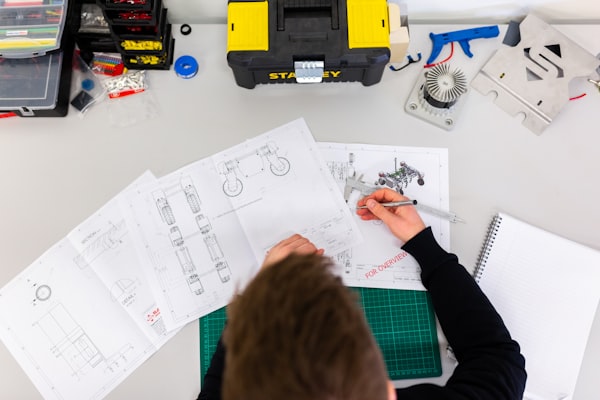
Weld Integrity Mapping
We document stress points along corner brackets, fan mount plates, and PSU trays — the areas where vibration from continuous operation tends to crack first.
Yongin, South Korea — Since 2018
We review and assess mining equipment at 0.05 TH/s and above, with particular attention to chassis welds, vibration tolerance, and how long a rig can run between major service stops.
Request a Chassis Assessment Browse Catalog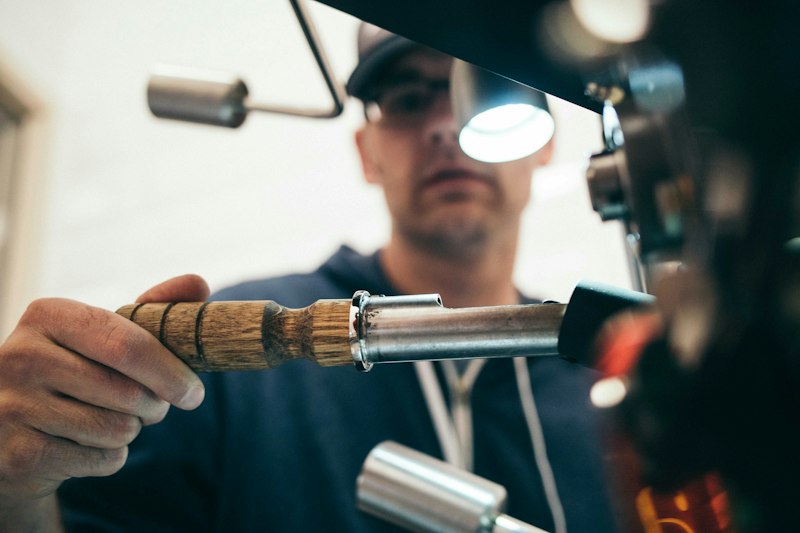
We document stress points along corner brackets, fan mount plates, and PSU trays — the areas where vibration from continuous operation tends to crack first.

Dust accumulation patterns and bent shroud edges tell us whether a chassis will maintain rated hash output through a full service cycle without thermal throttling.
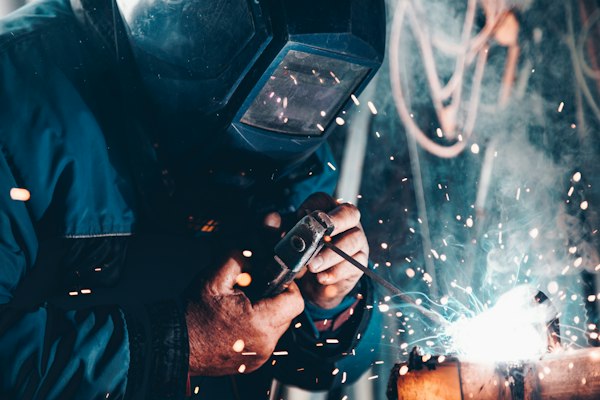
Based on frame grade, ambient humidity in your facility, and operating hours, we project realistic maintenance windows rather than manufacturer marketing figures.
Our Chassis Durability Assessment is a half-day on-site visit where we disassemble access panels, measure frame deflection under load, and deliver a written report with prioritized repair recommendations. Suitable for farms running 20 units or more, or for buyers evaluating used hardware before purchase.
Schedule a VisitWe brought in Sitesycamorefield after three Antminer S19 frames developed hairline cracks at the PSU mounting rails within eight months. Their report identified a batch-specific bracket thickness issue and gave us a reinforcement schedule we could execute during planned downtime — not during an emergency shutdown.
— Min-jun Park, 120-unit farm, PajuThe assessment was thorough and the report was honest about what we could defer versus what needed immediate attention. I would have liked faster turnaround on the written summary, but the on-site work itself was meticulous.
— Hye-jin Cho, hardware procurement, Seoul
In fourteen farm visits across Gyeonggi Province during the first half of 2025, we documented frame failures on 47 units. Of those, 38 showed cracking or deformation at the PSU mounting rail — never at the hash board tray itself.
When a mining unit runs, fan vibration travels through the frame in a predictable path: motor mount → side panel → corner bracket → PSU rail. Manufacturer rails on batch-produced units are often stamped from 1.5 mm steel. After roughly 4,000 continuous hours, micro-flexing at the rail-to-bracket weld creates a stress concentration that manifests as a hairline crack visible only when the PSU is removed.

Operators in Incheon and coastal Gyeonggi facilities frequently ask whether frame surface treatment matters for service planning. Our measurements over two years suggest it matters more than rated TH/s when humidity control is absent.
Powder-coated frames in facilities maintaining 60–70% relative humidity showed first corrosion spots at weld seams within 10 months of installation. Galvanized frames under identical conditions typically reached the same stage at 16–18 months. The difference is not dramatic month-to-month, but it compounds: corroded weld seams lose structural integrity faster under vibration load.
During a thermal pathway audit at an 85-unit farm in Ansan, we measured intake air temperatures 11°C higher on top-row units compared to bottom-row units in a four-tier rack configuration with 35 cm vertical spacing.
Hot exhaust from lower units rises and gets pulled into the intake fans of upper units when vertical clearance is insufficient. The elevated intake temperature forces fans to spin faster, increasing vibration amplitude. Simultaneously, uneven thermal expansion across the frame — hotter on the exhaust side, cooler on the intake side — creates torsional stress that warps side panels over months of operation.